

Studienkolleg in Germany: A Complete Guide for International Students
Germany is one of the most popular study destinations in the world, offering world-class education, low tuition fees, and excellent career opportunities. However, many international students cannot apply directly to German public universities because their school qualification is not considered equivalent to the German Abitur. This is where a Studienkolleg in Germany becomes essential.
A Studienkolleg acts as a bridge between your home country’s education system and German higher education, preparing you academically and linguistically for university success.
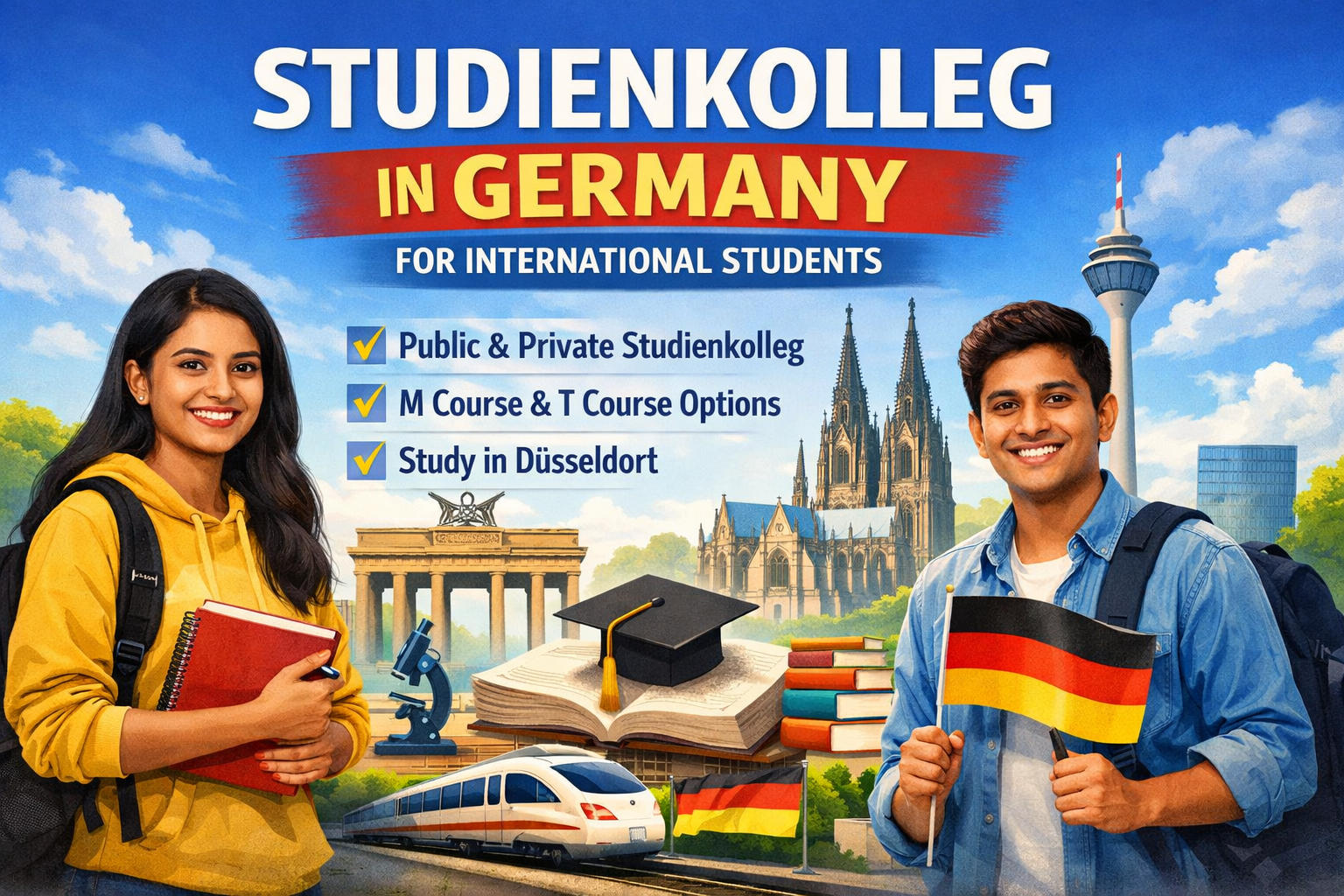
What Is a Studienkolleg in Germany?
A Studienkolleg in Germany is a one-year preparatory program designed for international students who do not meet direct university entry requirements. It helps students gain subject knowledge, academic skills, and German language proficiency required to study at a German university.
At the end of the program, students must pass the Feststellungsprüfung (FSP), a final assessment that qualifies them for admission to a German public university.
Studienkolleg for International Students: Who Needs It?
A Studienkolleg for international students is usually required if:
- Your school education is 12 years instead of 13
- Your qualification is not recognized as equivalent to the German Abitur
- You are applying for a German-taught bachelor’s program
Students from countries like India, Nepal, Bangladesh, Pakistan, and many African nations commonly require Studienkolleg before entering a German university.
Types of Studienkolleg Courses in Germany
German Studienkollegs offer different courses based on the subject you want to study at university. Choosing the right course is crucial for your academic future.
- For Engineering, Technology, Mathematics, and Natural Sciences
- Subjects include Mathematics, Physics, Chemistry, and German
- Ideal for students aiming for technical universities
- For Medicine, Dentistry, Biology, Pharmacy, and related fields
- Focus on Biology, Chemistry, Physics, and German
- Highly competitive due to limited seats
Other courses include:
Public Studienkolleg Germany vs Private Studienkolleg Germany
One of the biggest decisions students face is choosing between a public or private institution.
Public Studienkolleg Germany
- Mostly tuition-free
- Very competitive entrance exams
- Limited seats for international students
- German-language instruction
Private Studienkolleg Germany
- Charges tuition fees
- Easier admission process
- Smaller class sizes
- Personal academic support
While public Studienkolleg Germany is cost-effective, many students choose private Studienkolleg Germany due to faster admission and higher success rates.
Studienkolleg in Düsseldorf: A Popular Choice
Studienkolleg in Düsseldorf has gained popularity due to the city’s strong academic ecosystem and international environment. Düsseldorf is located in North Rhine-Westphalia (NRW), home to many top-ranked German universities.
Benefits of studying in Düsseldorf:
- Access to major universities in NRW
- Excellent public transport and student facilities
- Strong job and internship opportunities
- Multicultural student community
Many private institutions in Düsseldorf offer Studienkolleg programs aligned with public university standards.
Admission Requirements for Studienkolleg in Germany
Although requirements may vary, most Studienkollegs ask for:
- Recognized secondary school certificate
- Academic transcripts
- German language proficiency (A2–B1 level)
- Entrance exam (mostly for public Studienkollegs)
- Valid passport and visa
Early preparation is key, especially if you are targeting public Studienkolleg Germany.
Life After Studienkolleg: What Comes Next?
After successfully passing the Feststellungsprüfung (FSP), students can apply to:
- German public universities
- Universities of Applied Sciences (Fachhochschulen)
Your Studienkolleg course directly determines which university programs you are eligible for.
Is Studienkolleg in Germany Worth It?
For international students who dream of studying in Germany, a Studienkolleg in Germany is not just a requirement—it is a strong academic foundation. It improves language skills, prepares students for Germany’s demanding education system, and significantly increases the chances of university success.
Whether you choose a public or private Studienkolleg in Germany, the long-term benefits far outweigh the initial effort.
Final Thoughts
A Studienkolleg for international students is the most reliable pathway to German higher education. With options like M course, T course Studienkolleg, and growing hubs such as Studienkolleg in Düsseldorf, students today have multiple routes to achieve their academic goals in Germany.
If studying in Germany is your dream, starting with the right Studienkolleg can make all the difference.
Featured Snippet–Optimized FAQs
❓ What is Studienkolleg in Germany?
A Studienkolleg in Germany is a one-year preparatory program for international students whose school qualifications are not equivalent to the German Abitur. It prepares students academically and linguistically for German universities.
❓ Who needs a Studienkolleg in Germany?
International students, including most Indian students, who have completed 12 years of schooling usually need a Studienkolleg for international students before applying to a German public university.
What is the difference between public and private Studienkolleg in Germany?
- Public Studienkolleg Germany is mostly tuition-free but highly competitive.
- Private Studienkolleg Germany charges fees but offers easier admission, smaller classes, and higher success rates.
What is M course and T course in Studienkolleg?
- M course Studienkolleg is for medicine, dentistry, biology, and pharmacy.
- T course Studienkolleg is for engineering, technical, and science-related programs.
Your Studienkolleg course determines your future university degree options.
Is Studienkolleg in Düsseldorf a good option?
Yes, Studienkolleg in Düsseldorf is popular due to its central location in NRW, access to top universities, excellent infrastructure, and international student-friendly environment.
What German language level is required for Studienkolleg?
Most Studienkollegs require A2 to B1 level German at the time of application. However, students must reach B2 level before appearing for the Feststellungsprüfung (FSP).